Public Procurement Teams Want AI, But Are They Ready for It?
Published 11 November 2026
Can a government team want AI and still not trust itself to use it well?
That is what a new survey of public sector procurement professionals found. Euna Solutions surveyed 100 public sector procurement professionals across North America for its 2026 State of Public Procurement Report, released in September 2026. Thirty-nine percent of respondents said they want AI integrated into their procurement workflow. At the same time, 41% said they are not confident their organization is prepared to adopt it responsibly. Smart Cities Dive, which covered the survey the same month, reported the same figures and noted that rising costs remain the top external pressure on procurement teams this year.
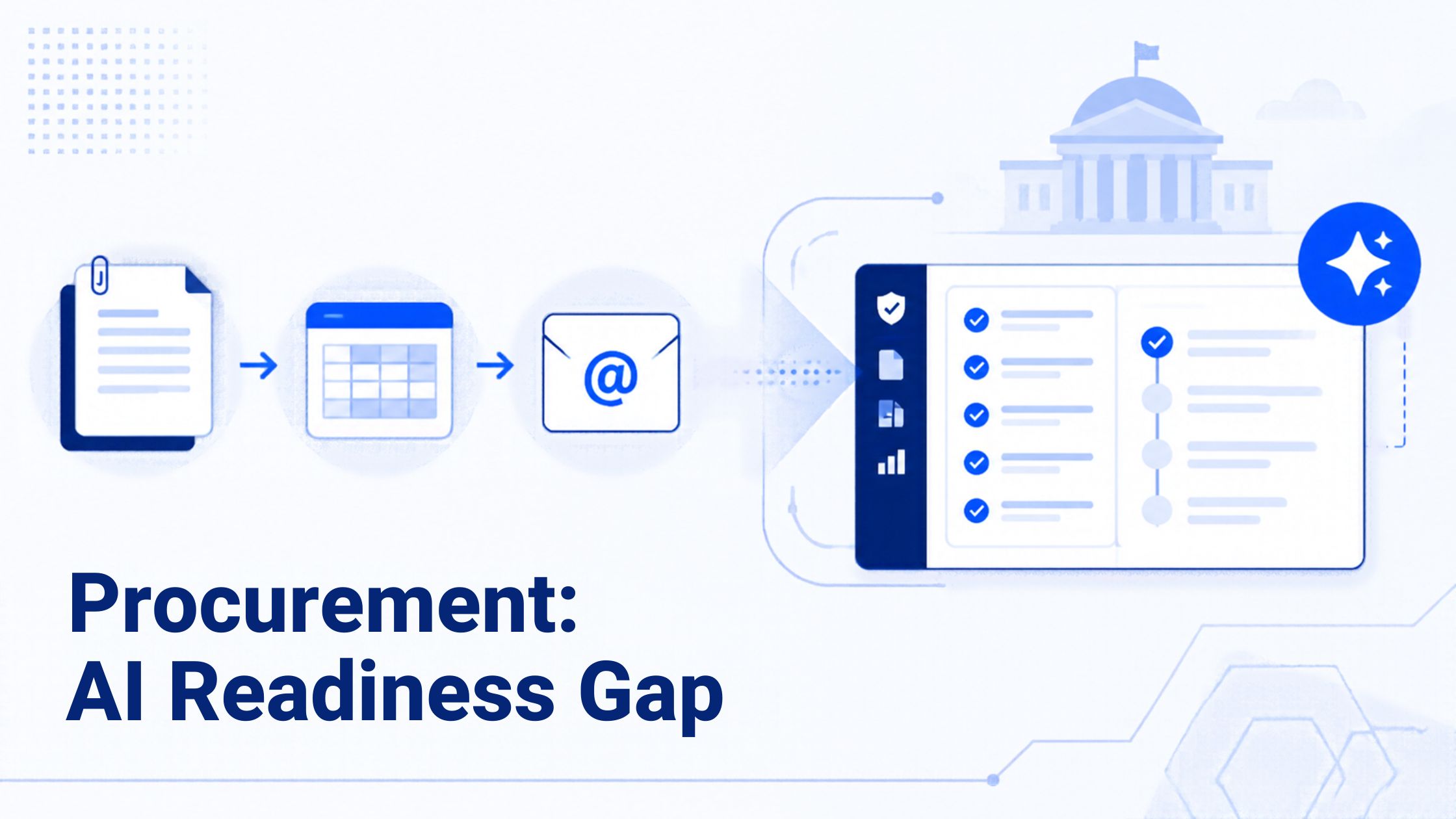
The gap is not only attitude. It is infrastructure. The survey found that 46% of procurement teams still manage their work primarily through spreadsheets, email or paper, even though half of respondents named streamlining and automating processes as their top priority going forward.
For government buyers and the technology teams that serve them, this matters. A procurement team cannot apply AI consistently, or explain an AI assisted decision to an auditor, if its underlying process still runs on email threads and shared spreadsheets. The workflow and recordkeeping foundation has to come before the AI layer, not after it.
What you can do this week
- List which procurement steps, like RFP tracking or vendor compliance, still live in spreadsheets or email, and flag where that creates audit risk.
- Before evaluating any AI procurement tool, write down who approves its outputs and how that decision would be explained in an audit.
- Ask current software vendors how they handle recordkeeping and audit trails, not only what AI features they offer.
Zamorins builds custom software and web applications for organizations that are replacing manual, email-based workflows with systems built to handle both compliance and future AI use.
Takeaway: Agencies that want AI should build solid workflow and recordkeeping practices first. That groundwork, more than the AI tool itself, decides whether adoption goes well.
Sources
- 2026 State of Public Procurement Report, Euna Solutions (September 2026)
- Rising costs, compliance pressures are top challenges for public procurement leaders: survey, Smart Cities Dive (September 16, 2026)