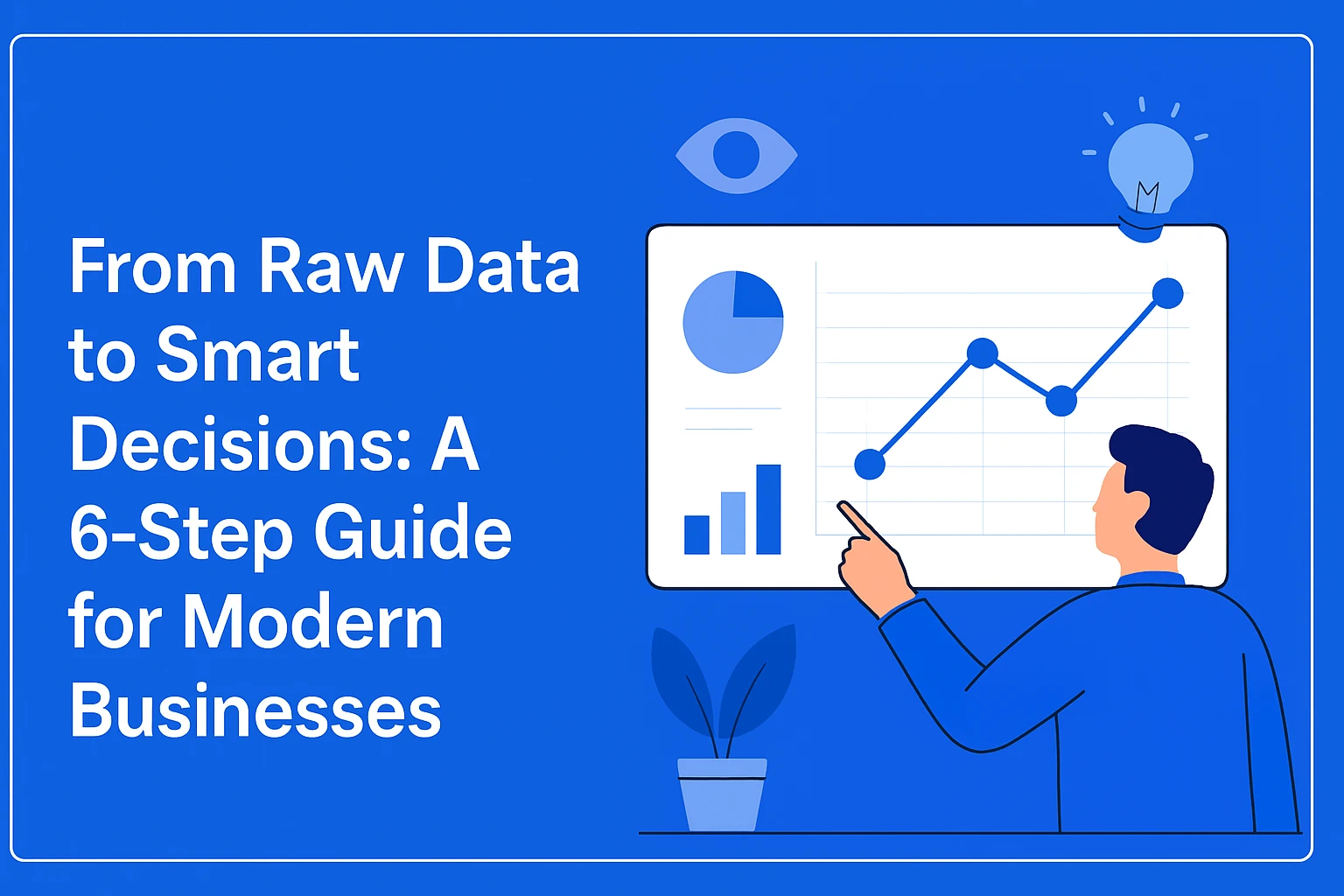
From Raw Data to Smart Decisions: A 6-Step Guide for Modern Businesses
Key Takeaways
Why Do Businesses Struggle to Use Their Data?
Making big decisions doesn't require big data. The majority of small businesses and startups already have the data; they just don't know how to make it clear.
Insights are hidden in plain sight, from website visitors to customer behavior and sales trends. The actual problem? Spreadsheets in disarray, an unclear plan, and incompatible tools.
If your team is still "going with their gut," you're going to fail, regardless of whether you're a white-label agency partner, a rapidly expanding tech startup, or a local service provider.
Step 1: Define What Success Looks Like
A Brief Response: "What decision do I want this data to help me make?" is a good place to start.
Without a clear definition, it is impossible to analyze. Prior to delving into dashboards or charts, establish your data goals. For instance:
Use SMART goals, which stand for Specific, Measurable, Achievable, Relevant, and Time-bound. They will provide guidance for your data.
Step 2: Clean and Organize Your Existing Data
In a nutshell, junk in equals junk out. Clean data cannot be compromised.
Typical problems with data for small businesses:
To tidy up your mess, use tools like Airtable, CRM features, or Google Sheets with add-ons. Start with the basics: recent traffic, clean leads, and purchase history.
Step 3: Choose the Right Metrics to Track
Quick Answer: Choose KPIs that are related to business value because not all data is created equal.
For instance:
This guide explains why your small business needs an online presence in case you're not sure which metrics are important.
Step 4: Visualize Insights — Don’t Just Report
In a nutshell, a graph is always superior to a five-page report.
Make use of images to:
Tools that help turn dry numbers into understandable visuals include Tableau Public, Google Looker Studio, and even Canva charts.
Read more about how AI is reshaping the business landscape.
Step 5: Automate and Integrate with Digital Tools
Quick Response: Almost forget it. Automate the flow of your data.
Make use of resources such as
Even your custom-built websites or mobile apps can incorporate data, particularly if you're in charge of several service lines or user journeys.
Step 6: Make Data a Daily Habit — Not a Monthly Report
Quick Response: Establish a cadence. Quarterly surprises are outperformed by weekly reviews.
Planning a full digital transformation in 2025? Start here.
Final Thoughts & Resources
Your data is just digital clutter if it isn't assisting you in making better decisions. However, when applied properly, it turns into your most cost-effective competitive advantage.
Do you need assistance with full-scale digital strategy, analytics integration, or custom dashboards? Allow Zamorins Solutions to construct the link between your data and expansion.
Related Reads:


Q1: I’m a small business — do I really need analytics?
Yes. Even basic tracking (like customer location or product views) can help you tailor offers and avoid wasteful spending.
Q2: What tools should I start with if I have a limited budget?
Google Analytics (free), Google Sheets, and a CRM like HubSpot (free tier) are great entry points.
Q3: Can data help with SEO or social media?
Absolutely. Data shows you what keywords convert and what posts bring real engagement. Check this out: Why SEO Feels So Hard.